
The challenges of a night train startup, strategic hubs in their pipeline, their collaborative approach to competition, and the perks of vintage stock—we hear all this and more in an interview by Kristóf Morandini.
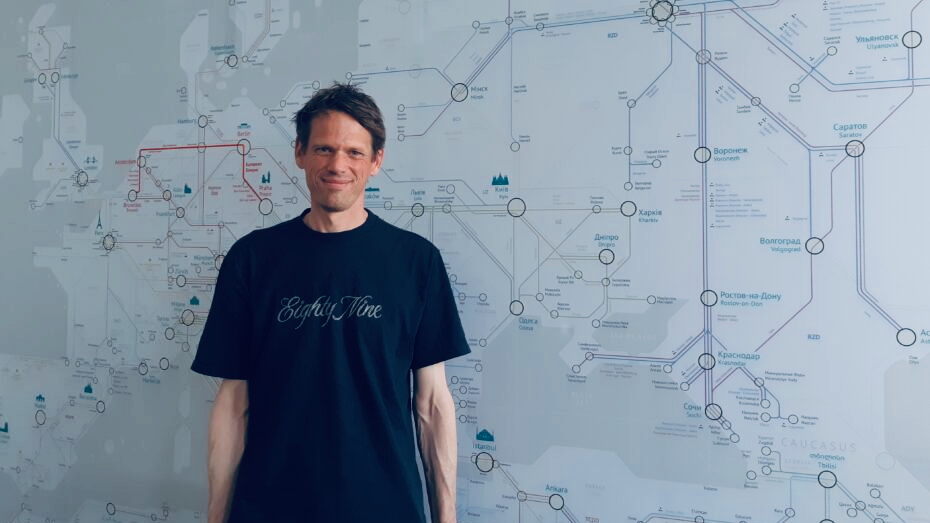
We met with Chris Engelsman, one of the founders and leaders of European Sleeper, in their office and HQ in Utrecht. They manage the company, established in 2021, currently running night trains in Europe on two routes, a total of 12 trains a week. On the office wall, there is a several-square-meter map of night trains in Europe from 2022.
Looking at this map, at first, it seems there are a lot of night trains in Europe. How do you see it?
There are too few night trains, we need more. In central Europe, it is quite OK with ÖBB, and in eastern Europe there are a relatively good number of night trains, but in western Europe there are very few. Especially international night trains. In France, there are some domestic night trains, but in Spain there are none. To and from Italy, of course, there is ÖBB, but in general we are missing many opportunities, especially in Western Europe.
We will come back to the train situation, but first, let’s talk about the past. Was it a childhood dream of yours to start a night train company?
For me, it wasn’t, but my father worked on the railway, and I always loved to travel on night trains. Maybe it was in the back of mind, to do something, but it really started when DB and SNCF canceled the night trains in the 2010s. That was really the moment when I thought I needed to do something. It’s such a waste. Elmer, my fellow co-founder, has long had it in mind to start his own rail company.
Was that canceling the trigger?
Yes, but the company wasn’t exactly planned. At first, I started with creating an information webpage, called Nord West Express. There, I tried to explain to people how nice it is to travel by train at night, and it wasn’t necessary to cancel these trains. The way to the company was step by step. First, I made a kind of pilot project, a Festival Train in 2020-2021. It was planned as a weekend project. It’s a nice thing to do, you rent a train, you pay a lot of money, and then you have to sell tickets for the festival (laughing). It was planned as three open stages with live music and DJs, with a restaurant, and it would be a twice-yearly festival. For me, it was a try-out to see if it could work or not, and also to show the public that it’s a nice thing. But because of COVID, it was canceled. But during this project, I spoke with a lot of people. One of them was Elmer, and we talked about what we can do for night trains. We thought that if we tried something, a regular night train would be better compared to one-time charters.
How did it continue?
It was also a trigger that, to some extent, politicians in the Netherlands and at the European level started speaking about how important a night train can be. Also, the work of an activist group, Back-on-Track, like organizing pajama party in Paris was a factor. The activism of Greta Thunberg also helped. In 2016, when we started lobbying for night trains with Elmer, nobody really believed that they would return, except ÖBB. But three to five years ago, it changed, and we thought that we could do something about it. If I remember correctly, in 2020 in September we made a decision to give it a try. This was the moment.
At that time, what was the long-term vision for the company?
That took a while. We started very practically. First, you need an account, and you need to create a business entity; at that time, we were still very much in the mode of just giving it a try. I think it took half a year or one year until we started thinking about the future and about more routes.
And from the business case, it’s better to have a network instead of a single line. To some extent, you profit from scale because you pay some costs only once.
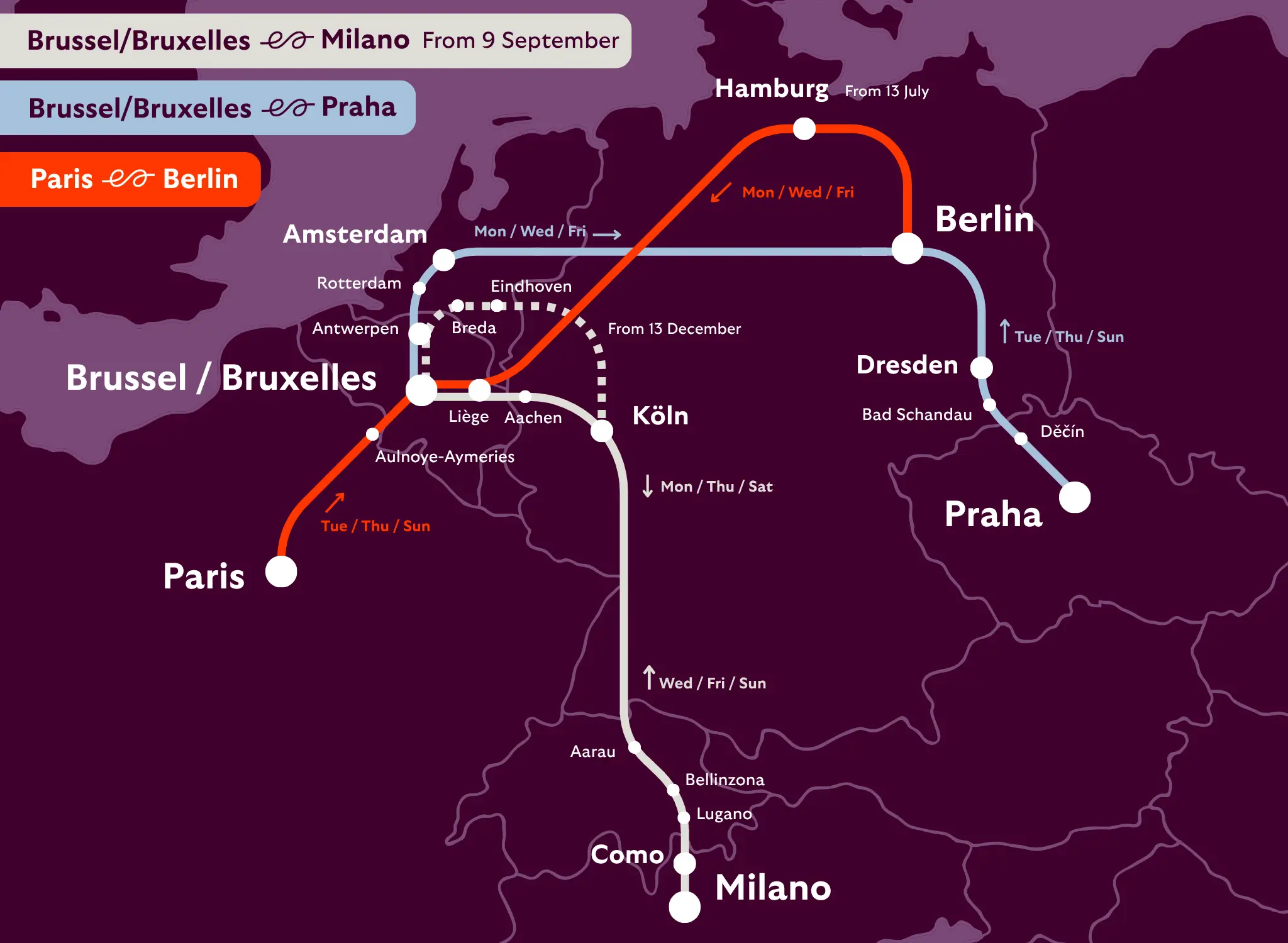
European Sleeper’s destinations, with a new line opening from September 9th 2026
What size are you considering as a network? What is your growth plan?
We are working towards a network with several hubs. Currently, we have a hub in the Netherlands, but we are moving more towards Belgium. We think we can operate two or more additional lines from here, and we are also considering new hubs. Our vision is to have three more routes by 2030, mainly from Belgium and the Netherlands. So, there are five or six routes. I know, it’s quite ambitious. (smiling) And in 2040, to have 25 routes. But all depends on the rolling stock, that’s the main constraint.
Can you name future hubs?
We don’t know yet, but Berlin makes a lot of sense. We already have the Berlin to Paris train; we have a lot of customers from there, so it makes a lot of sense. But we do not necessarily want to compete with Nox, for instance. That’s not the purpose. An obvious new hub could be Milan, where we will go from September, maybe combined with Barcelona. There would be a huge demand for night trains going to and from Barcelona, also from Zürich, Paris, or Milan.
Are you planning to travel south from Barcelona?
Maybe, but I wouldn’t say. There are other challenges, like gauges. It’s not impossible, but not easy. But from Barcelona to Milan, Paris, Rome, etc., we would not have any doubts about the demand for trains like that. The challenge is to get the first train to Barcelona. There are some procedures and permits. It’s not impossible, but it’s paperwork. Paris can also be a hub, but it also depends on others. We think it would be good in general to have competition, but it’s not our main goal. Our main goal is to increase the number of night trains.
You mentioned that rolling stock is the main constraint. How?
Because in the last few decades, the large railways have put very little into new night train carriages. So there is a backlog, and hardly anything is available. Of course, there are the new ÖBB NightJets, and they’re already helping indirectly. Because that means they are selling older carriages or not renting from others, for example, from the RDC. We are renting some carriages from RDC. It’s a temporary solution, because the coaches are fine, but old, with a traditional concept. In the end, we need a more modern concept, with more privacy options, evolved into a 21st-century product.
When can we expect rolling stocks in a new style in European Sleeper?
It takes a long, long time. The first step is to acquire or own rolling stocks, old couchettes. Because then we can upgrade these carriages a little bit. Apply our own branding, and so on. The second step is to refurbish existing seating coaches or sleeper coaches. Upgrading a seating coach is quite expensive, but it takes less time than buying a new one. A total refurbishment would take 1.5 years to convert an old seating coach into a modern sleeping coach.
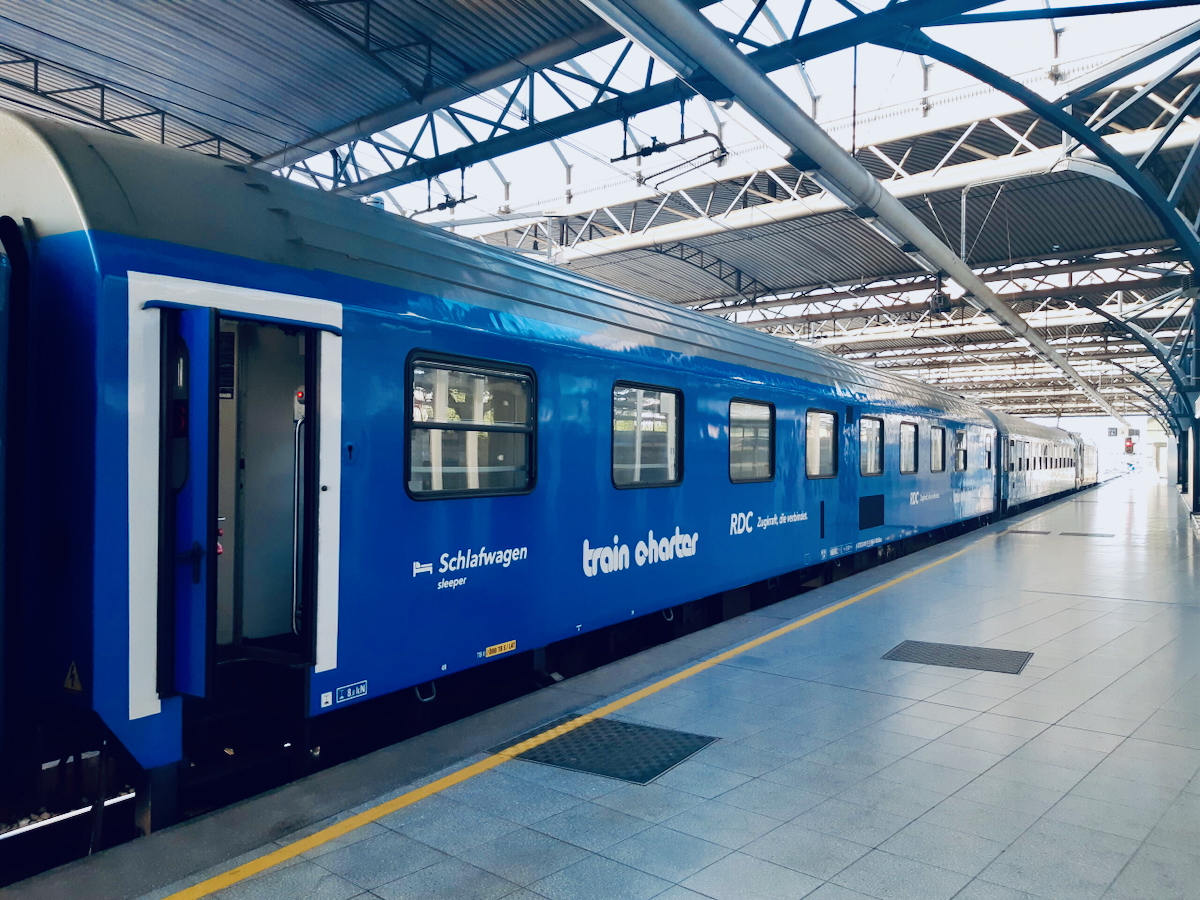
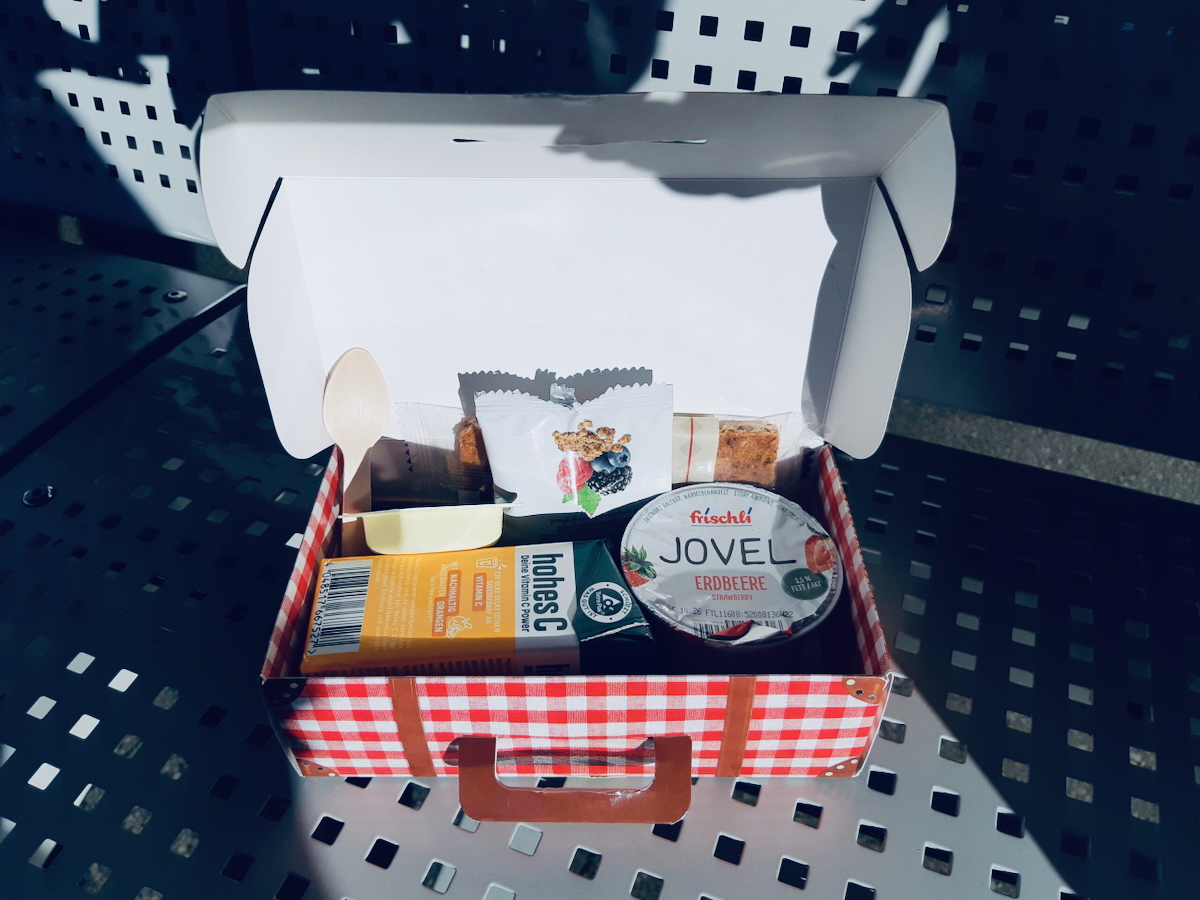
Snapshots from Kristóf Morandini’s (our interviewer) journey on the European Sleeper from Berlin to Paris
You mean 1.5 years from when the stock is available?
Yes, but it can even be two years, because the whole obligation process can be quite time-consuming. The last step would be to buy new rolling stock, but it would take about two years. For example, it took a long time for the new generation ÖBB NightJet order.
Can you imagine working with rolling stock innovators, for example, Luna Rail or Nox, in the future?
Yes, we could. It depends on the exact requirements. The main constraint for other innovators, too, is financing. Because we are between startup and scale up, and to buy new rolling stock, we are talking about tens of billions. Capital funds and public funds always look into finance. We are considering asking governance not to provide a direct loan, but to give a guarantee on the loan because getting a loan is an entrance barrier.
Is the problem the cost of the loan?
The cost could even be covered; the problem is that we can not get the loan. Institutions say it’s too risky to give a loan for a startup. It’s a Catch-22, because you don’t get a loan, because your operation is too risky from the institution’s point of view, but to grow and operate less riskily, you need a loan.
The European Committee selected European Sleeper as one of the ten pilot projects some years ago. How does it help?
It does help. Not that they are sending money over, but we don’t expect that, and you can not do that in an open market. But the fact itself sometimes helps, like talking with infrastructure managers in France or in Belgium. We could force them to a table, because we are a pilot project. In general, we do not expect to receive subsidies. Sometimes it is needed, because not all routes are profitable, especially when a new route is started. That would be a reason to subsidize a route. But we think that between European cities it should be possible to operate trains like this, without a subsidy. So we are not expecting financial support from the European Commission, but it would be good to take away the entrance barriers.
Besides the problem with loans, what other entrance barriers are for creating night trains?
Getting loans is the biggest barrier. Another entrance barrier, but we seem to be able to cover that, the bureaucracy, and I would say the technocracy of the railways. Luckily for now, we have a team of three to four people who are very good at timetabling and discussing with infrastructure managers. It takes so much time, the rules are different everywhere, and these discussions are not always straightforward. But it helps a lot not to give up and keep going. So in the end, we can manage these situations.
Regarding your current rolling stock, this is a bit old. What’s the opinion of the travelers on that?
Of course, ÖBB’s new trains are brand new. But if we compare our trains to other trains in Europe, these are the same products. These are in good shape, usually work well, and most passengers are happy with them; the reviews are good. Obviously, we do see people who are sometimes disappointing, and we would also have rather modern coaches. This is the plan, but for the moment, it’s better than nothing. We try to improve on cleaning and similar things. And in most of the reviews, you can see that the staff on board is very friendly, which is not always the case on other trains. That’s something where we stand out, and we are focusing on having people with a smile and making you feel at home. I think it’s really important. Another thing, these six-person compartments are very suitable for specific target groups, e.g., families and small groups. You have the table for, for example, to play board games, then it doesn’t matter so much that it’s not brand new. We see these groups booking a lot with us. And a nice thing about these trains is that you can open the window. Like if you travel from Berlin south in the Elba Valley, you can hang out the window. Which is a nice thing. You can’t do that in a new generation NighJet. So, sometimes the vintage trains have an advantage.
Are there big players that are shaking the night train segment in Europe, or is it more than a combined result from a lot of participants?
It’s difficult to tell, because ÖBB, of course, had a huge impact when they took over the City Night Line and other routes. I think it was a critical step for night trains in Europe at that time.
And I think they still have a lot of impact, for example, with the new night trains. I think we also have a big impact, and we are trying to go beyond the one root. As I mentioned, we try to establish a network. If we manage to do so, we will become a huge player in the western side of Europe. We are not planning to compete with ÖBB. If it happens, it happens, but it’s not a goal in itself. We would cover more of the western side of Europe. We think it’s important to become a bigger player. At the same time, there is a lot of demand from passengers. We think it’s good that there are more initiatives like GoVolta, a Dutch initiative for day trains, or Nox and others’ plans. We can only encourage that, and it means that there is demand. Also, it’s a good sign that some states buy new carriages, like Sweden or Italy. There is a lot going on. We are happy to act between the state-owned railways. For us, it doesn’t really matter whether it’s a state-owned or a private company, as long as the competition is equal. We are in good contact with state-owned companies.
How do you see the situation for night trains in general?
I think that in the end, the network should be on a European level. For example, SNCF will probably be boarded with their domestic night trains. It’s quite important, but we are missing European initiatives. ÖBB is doing that, and Nox is now planning to go international. It would be important not just to have domestic night trains, but across the continent.
Pingback: Infolettre août 2026 – Oui au train de nuit !
Pingback: For night trains to be popular: build also six berths compartments – Oui au train de nuit !
Comments are closed.